Super Bowl 60 Grins and Groans

Congratulations to the Seattle Seahawks on their dominating performance over the New England Patriots. And a special shout-out to Charlie Puth for a stunning performance of the national anthem. Wow! If only the advertising could reach such heights.

THEMES
While stuffing your ads full of celebrities is always a Super Bowl theme, this year didn’t deviate from that path. It was a bit much, and in most cases, did not really serve the spots very well.

AI seems to have pushed out automobile advertising. I counted six (seven if you count the Alexa offering with Chris Hemsworth?) spots that featured AI in some way, including ChatGPT’s nod to developers, and some new entrants to help with every day tasks, like creating apps.

Retro also showed up to the party, with Instacart taking the absolute cake with Ben Stiller and Benson Boone and their over-the-top competition for the spotlight. Very funny. Dunkin’ tried their hand at it, too, with less success, and Xfinity inserted themselves into the original Jurassic Park with a well-managed proposition that their services would have “just worked” and avoided some pretty big mishaps. Plus Coinbase rocked a retro-looking karaoke spot for…well, that’s unclear. More on that later.

Speaking of unclear, vagueness unfortunately turned out to be a theme too. A movie promo for Netflix that never mentioned the title. The Coinbase spot, just listing irrelevant lyrics, and poor Poppi soda, talking about “vibes” instead of probiotics.

Also, the Backstreet Boys was kind of a theme this year too (?) I’ll just leave that there. And did I mention that there were talking – make that SINGING – clumps of hair on bathroom floors and in shower drains? Ooof. Makes you miss the good old days of puppy-monkey-babies, doesn’t it?

HONORABLE MENTIONS:
Budweiser returned to form with a coming-of-age story of a Clydesdale foal and a clumsy eagle chick that both grow up to become symbols of Americana. They generally don’t miss the mark with these life-on-a-farm vignettes, and this year was no exception.

Google Gemini let us in on a quiet conversation between mother and child while looking for a new home, and using Gemini to visualize the space in new ways. Their banter is sweet and sensitive. And the platform shines because it’s proven right before your eyes. For years, Google has always managed to humanize their services (even paid search) with a deft and elegant touch. Well done.

HIMS and HERS probably made the most significant statement of the night, starting out by saying “rich people live longer.” And then doubling down with the line “the wealth gap is a health gap.” Then they hit it out of the park when they wrap the idea that personalized science is in reach for everyone, punctuated with the line, “Now that’s rich.” Wow – now THAT’S a statement, and a great way to get 99% of the country to at least pay attention. Gutsy move, and I think it paid off handsomely.

GRINS:
The best ads of the night all have something in common, which is that they take a simple concept (which is usually a basic, un-exciting value proposition) and inject it with drama in some way to make that boring-ish platform an exciting new way to understand the brand. All of these did that very well this year. Here are my top three:

Apartments.com/Homes.com starts with their basic selling proposition: “with millions of listings on our platforms, you’re going to find virtually any place you can live.” Then, they set up the way in to the concept: it would be easier to just find the places you CAN’T live. Then, hilarity ensues when they dramatize those “you can’t live here” locations: a tarmac at a busy international airport, a de-commissioned Soviet space station, the Mariana Trench, and so on. There’s a clear path here to successful advertising, which is to dramatize the benefit, or in this case, dramatize the opposite. Strong work here for sure.

Grubhub
Sometimes, the best ideas are the simplest ones. And no brand demonstrated that better than Grubhub. They took a bland boardroom idea about not passing on delivery fees to consumers and turned it into an elegant, funny, villainize-the-fees sendup. The brand joins us as partners against a common and bothersome enemy. (Smart.) It doesn’t hurt when George Clooney sits at the head of the table and says “we’ll eat the fees.” The reason I love this spot so much is for its SINGULARITY. One idea, clearly articulated, then exceptionally well-executed.  A winner in my book.

State Farm wins the night with their Super Bowl spot, spoofing “halfway there” insurance with Danny McBride and Keegan-Michael Key clearly explaining that you’d be “livin’ on a prayer” with their insurance to Hailee Steinfeld. The spot was great, but so were all the ancillary teasers that they did both online and on sneaky TV buys leading up to the game. Of course, a Jon Bon Jovi cameo at the end doesn’t hurt and Steinfeld seals the deal when she turns to a State Farm billboard and simply utters “I should have gone with State Farm.” Fun, over the top, deliciously comedic performances, (I’d love to see the outtakes for this) and a clear and simple proposition. They drive off into the sunset (that’s the victory) and the State Farm Guy says “stop livin’ on a prayer and get State Farm.” This is big-league-level Super Bowl advertising, well-executed, well-acted and well-delivered.

GROANS
Now, if taking your core value and dramatizing it in some way is a smart path for successful Super Bowl advertising, then the opposite is true when you either a.) don’t state your value proposition very clearly or b.) don’t explain why there’s value in choosing you. A lot of spots fell flat in this regard, including these.

Ritz crackers had the basic punch list of a Super Bowl spot: get a bunch of celebrities. Check. Put them on a beach and have a party. Check. But then…what? We’re “salty” and don’t want to go to the party? Sure, Jon Hamm delivers a couple of brand points when he says “they do have Ritz crackers, though…that salty buttery flavor…” And…that’s it. Oh, and then Scarlett Johansson shows up on a jet ski. Bowen Yang is almost always funny, but the script here just made him an unclear, even unlikable character. The problem here is that Ritz do not come out as the hero, nor do the characters turn out as the heroes once they decide to join the party. It’s like they positioned Ritz for “other people,” which is the exact opposite of a brand directive, don’t you think?

I don’t even know what Squarespace was trying to accomplish with their commercial. The ad seems to focus on the main character not being able to secure a vanity URL, and then being frustrated by that. (Also, why does she live in a castle on a remote island?) But that’s not the Squarespace proposition anyway. I didn’t understand this at all. Someone just got enamored of the idea of having Emma Stone and director Yorgos Lanthimos do their spot and then seemed to forget what people know and understand Squarespace to be. (A template-based website building platform.) Now…if the ad was designed to show that Squarespace now offers domain registrations, (do they do that now?) this was also the exact OPPOSITE way to describe that. (She can’t secure emmastone.com throughout the spot and smashes laptops in frustration.) Basically, Squarespace dropped like $10 million to do a very nice commercial plug for GoDaddy. Head-scratcher for sure. Side note: director Lanthimos also did the Grubhub “Feest” spot.

Coinbase
Sure. Everybody wants to steal some headlines for doing something downscale, and maybe even outrageous. Remember the floating QR code or Crowdstrike’s “western” theme in the  last couple of years? This was just weird. I’m not sure how “rock your body” lyrics relate to a cryptocurrency platform. Are you? Please explain it to me. Note to future Super Bowl advertisers: show this first in your strategy meetings and then explain to everyone, “we’re NOT doing this.”

So…what was your favorite? I’d love to hear.
Six for 2026: the marketing truths that actually matter this year.

Well, it’s a new year, and you know what that means. Gyms are overcrowded with people determined to stick to their beach-body resolutions, and bloggers everywhere are posting “2026 prediction” lists.

Predictions are dangerous because they’re a zero-sum game. You’re either dead-on, or dead wrong. So let’s not do that. Instead, let’s remember that marketing doesn’t change so much as it adapts to its environment: new tools, new methods, new channels. So this post isn’t about trends. It’s about truths –  the ones I think will be smacking all of us in the face in 2026.

Truth #1: GEO is re-shaping search.
If SEO was about ranking pages, then GEO is about shaping answers. Even though it’s still important, being “findable” is no longer the ultimate goal. In almost stunning and sudden fashion, prospects aren’t scanning the top 5-10 blue links on Google…they’re reading a synthesized and sophisticated response from a generative engine (like Gemini, most ubiquitously) and then moving on with their day.

The new challenge for search marketers is less about keyword management and campaign groups, and more about establishing authority and clarity through curated content. We have to answer the question: If an AI bot has to explain our brand, what would it say? And if your positioning is even a bit fuzzy, the machine will happily invent something equally nebulous for you. And you probably won’t like it.

This is not a technical or platform problem with Google Ads. It’s the new reality, and a challenge to upgrade our thinking and our writing.

Truth #2: AI will not solve your marketing problems.
Most AI-powered marketing today is simply the automation of work that probably shouldn’t exist in the first place. Re-hashed content, surface-level messaging, and ugh, those AI-generated videos and commercials that are shiny, but hollow.

Make sure you know who you are, what makes you different, and whom you want to care about those things. Because AI won’t make a bad strategy better, it’ll just help you deploy it faster. So hey, let’s be careful out there.

Truth #3: Brand still matters (and always will.)
From the time the idea was first introduced, (it was as far back as the late 1950s by a Harvard professor called Neil Borden,) the concept of brand is what helps companies distinguish themselves in loud and cluttered categories. Brand helps reduce cognitive risk for consumers…when they’re not sure what the comparison criteria are, they can fall back on the idea that “I know something about this company.” (That’s true even if what the consumer “knows” is what you’ve been telling them all along. Yay advertising!) Brand drives preference, and preference is a marketing force that can’t be easily usurped.

Truth #4: Offline marketing is not going away anytime soon.
Despite the popular thinking that social media is the only channel that matters, the physical world is still out here kicking ass. And while we all embrace digital channels for their efficacy, let’s remember that old engines will continue to run as long as you start them up every now and again, and keep the oil clean.

Direct mail still delivers reliable returns. Events still drive serious leads. Popups (stores, experiences, installations,) are still, well, pop-ular. When a brand shows up in some physical form, whether in a mailbox or face-to-face, it signals scale and even seriousness. In a world where the media cycle is based on the next post with a million views and influencer promo codes, offline marketing tells consumers you actually give a shit.

Truth #5: Selling the category is still sticky.
When consumers don’t quite understand the nuances in a given category, they default to less risky decisions, like buying on price or relying on referrals. But that might not favor YOUR brand.

Brands that educate consumers on the category help to reframe the entire decision process. (This is why category content is so popular.) When you do this, you tell consumers that your brand “gets it” and is there to guide in some way. And the best part? None of that feels “salesy.” Instead, it feels like help to the consumer, and your brand gets the halo effect.

Truth #6: The middle of the funnel is where decisions get made.
I rarely talk about funnels (except that one time, in this post) because consumers are not abstract concepts that “move” through a space. But as a conceptual framework, funnels help illustrate the consumer journey across the time variable.

Top of the funnel marketing is easy…it’s just about attention. Brands will do all kinds of dopey things to get attention, (remember when iHop said they were switching to a burger company?) and they still seem to work. Conversely, the bottom of the funnel is largely an outcome function, and almost always offer-driven.

But the middle? Ooof. That’s the hard part. It’s hard because it’s messy. Because it’s harder to measure. And because it demands work, mostly in the form of strong, informative and relevant content. It’s hard mostly because that’s where the leakage lives.

Content that helps educate consumers on the category (see Truth #5 above) and helps them decide at their own pace can do more long-term brand building (see Truth #3 above) than just “getting the click.” If your funnel goes from “hello” to “buy now,” you’re gonna struggle.

The job of marketing hasn’t changed, and it won’t change just because it’s 2026 and we have some shiny new tools at our disposal. It’s still about managing perception, reducing risk, and driving preference at the moment of choice. Face the truth(s) and make this the strongest year ever for your brand and your clients.

Cracker Barrel and the logo fiasco: the real lesson.

In case you’ve been away on Mars for summer vacation, Cracker Barrel announced a rebrand, social media erupted, Trump tweeted, and within days they reversed course and went back to their old logo. But here’s the spoiler: this was never really about a logo. It was about who controlled the story.

Okay. Now you’re caught up. How was Mars?

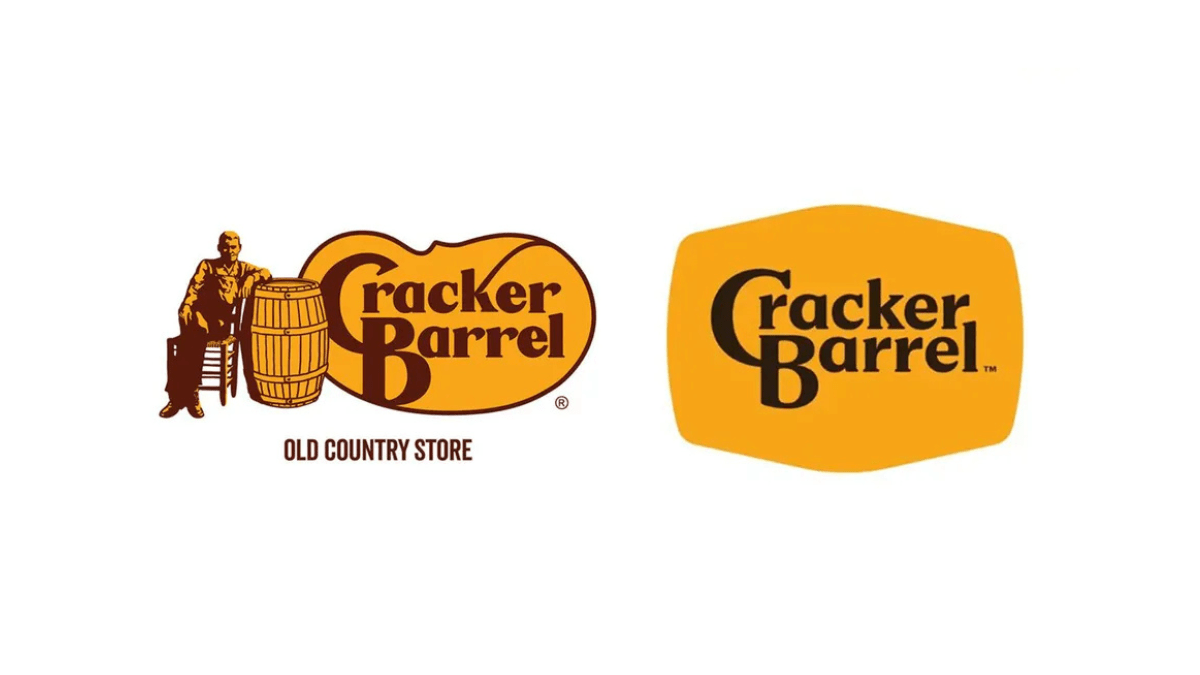
Cracker Barrel before and after images

First things first: let’s not romanticize the old Cracker Barrel logo. We can all agree that thing was crap. Overly fussy, hard to reproduce at small scale, and more nostalgia than any semblance of valuable visual communication. It screamed 1970s “down-home” branding, which is exactly when it was born. The barrel-and-guy part was never sacred. Losing him wasn’t tossing a Picasso into a garbage can, it was shedding a dated illustration that had long outlived its usefulness.

The new logo? From a purely graphic standpoint? Decidedly better. Cleaner. Contextual. Legible in digital environments. A mark you can actually scale to an app icon without losing the plot. Any competent designer will tell you it was an upgrade. And yet here we are, watching the company scramble back to Uncle Herschel after a week of torches and pitchforks from the social media mob. “REDOS WILL NOT REPLACE US.”

Here’s the thing most people—including, notably, the president—missed: the logo was just one element of a much broader brand storyboard. A great new color palette. Revised typography. Shapes that make sense, including the central-focus barrel outline. Cracker Barrel’s leadership wasn’t trying to erase “heritage.” They were trying to refresh a rickety old brand with a comprehensive strategy aimed at the next two decades or so. This included remodeled restaurants, a reworked menu, more efficient kitchens, and a retail rethink that included some pretty nifty new packaging. They wrapped it all in a central theme called “All the More.” They weren’t just drawing a new wordmark; they were attempting a strategic modernization across the board.

Cracker Barrel brand story board image

And the strategy surrounding this brand refresh was sound. Cracker Barrel’s real problem wasn’t just an outdated logo…it’s an aging customer base. Julie Felss Masino, the CEO, even said it out loud on Good Morning America: “Cracker Barrel needs to feel like the place they (their audience) want to be today, and tomorrow.” The backlash to the logo redesign, of course, is all about holding on to yesterday.

The heavy blowback wasn’t about typography or colors or shapes—it was about identity politics. For some, any change to anything in America equals “woke.” For others, evolution is just common sense. The logo became a proxy fight in America’s culture war, which is ridiculous but inevitable in 2025.

And here’s the rub: no matter what side you’re on, Cracker Barrel comes out on top. For two weeks, the entire country was talking about Cracker Barrel. Lead segments on national news programs. Graphic designers guesting on CNN. Let me repeat that: Cracker Barrel. A brand that hasn’t been relevant in a national conversation since, well, ever. As I wrote in a recent post: the conversation is the campaign. Millions of people who hadn’t thought about hashbrown casserole in years suddenly had strong opinions about a roadside chain’s logo. That’s brand oxygen you can’t buy.

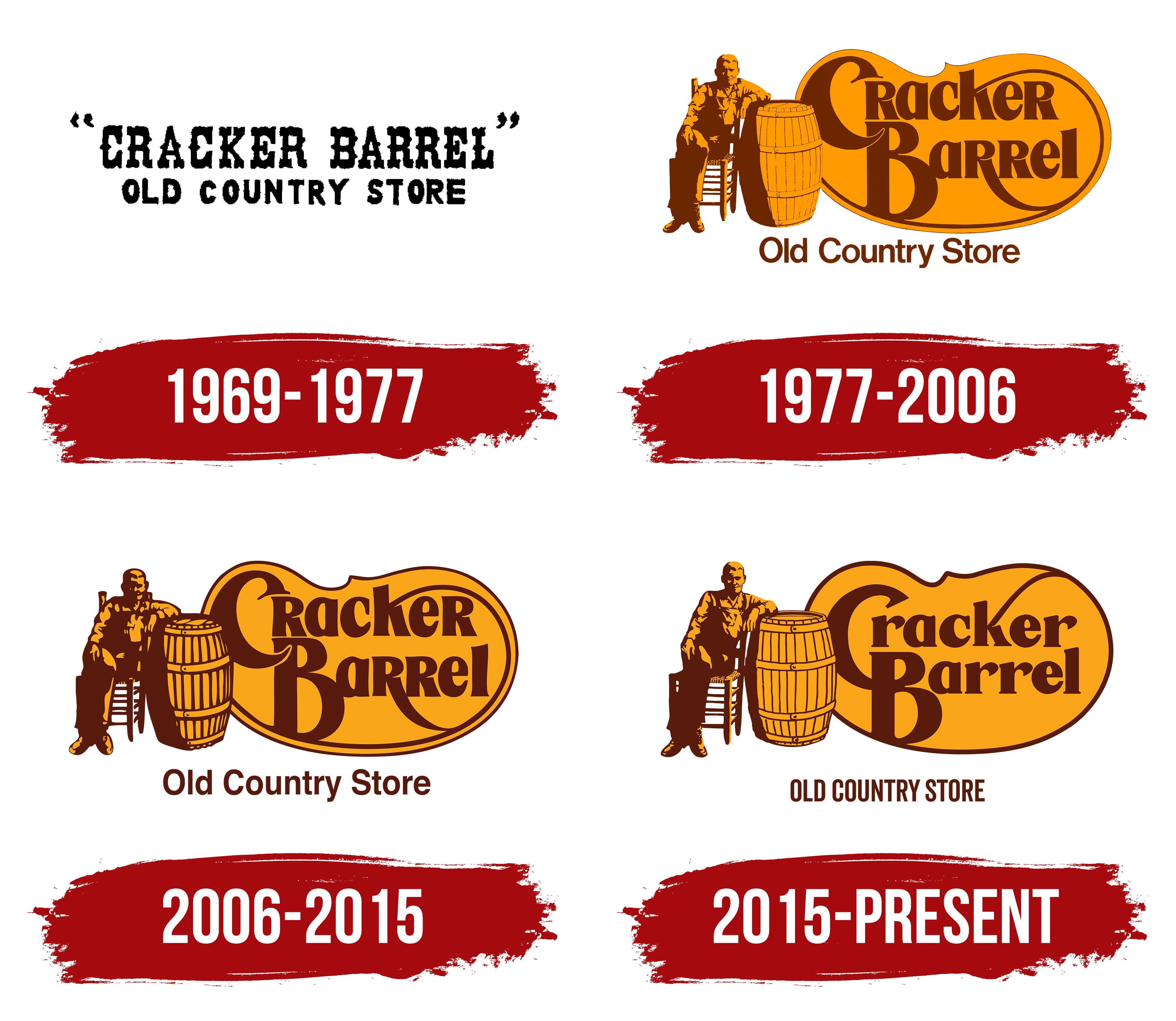
Let’s also not forget that this was not the first time the Cracker Barrel logo has been updated. It’s gone through multiple tweaks across its 50+ year history. Brands evolve their marks based on strategic direction, but also on design trends and the zeitgeist. Burger King did. Pringles did. Pepsi has done it enough times you could write a doctoral thesis on their logo alone. Logos aren’t museum pieces; they’re tools that adapt to the times, the mediums, the audiences, and the brand strategy.

Cracker Barrel logo evolution image

So, what actually is the Cracker Barrel brand? Here’s the core: folksy and casual roadside restaurants, easy to find off the interstate. They serve good, abundant food quickly, at a reasonable price, wrapped in a veneer of “Americana” hospitality. The real differentiators are iconic: the country store you pass through, the rocking chairs out front, and that peg game on every table that challenges your executive functions before your cornbread arrives. None of that has changed. The identity and experiences and memories that actually create the Cracker Barrel brand remain untouched.

So let’s get to the real lesson here. Cracker Barrel’s problem wasn’t that the new logo was good or bad or different. The problem was that the storytelling around its release got hijacked by everyone with a social media account. Everything else – the nostalgia equity, the politics, the stock prices – those were just symptoms. And because of those symptoms, they caved to the noise with a wimpy “we listened” statement just days later.

Cracker Barrel let themselves get dragged into a culture war, and they blinked. Brands should evolve. They must evolve. But evolution requires courage and clarity of communication. Without it, you wind up explaining why Uncle Herschel is back on the porch in your crappy old logo. And here’s a billion-dollar question: now that you’ve reverted back to the old logo, are you stuck with it forever? Will there EVER be a time when updating it is appropriate? 2026? 2030? As it relates to evolving in ANY way, the company has made it increasingly difficult for itself with this slippery precedent.

For the record, I think reverting to the old logo was a mistake. It ceded the narrative to the loudest voices and undercut the logic of the broader strategy. Now the 21st-century brand experience is saddled with a 1970s logo. That mismatch doesn’t just look awkward—it confuses customers. And confusion at the brand level eventually shows up where it hurts: at the cash register.

American Eagle and Sydney Sweeney: massive marketing mileage from meh advertising.

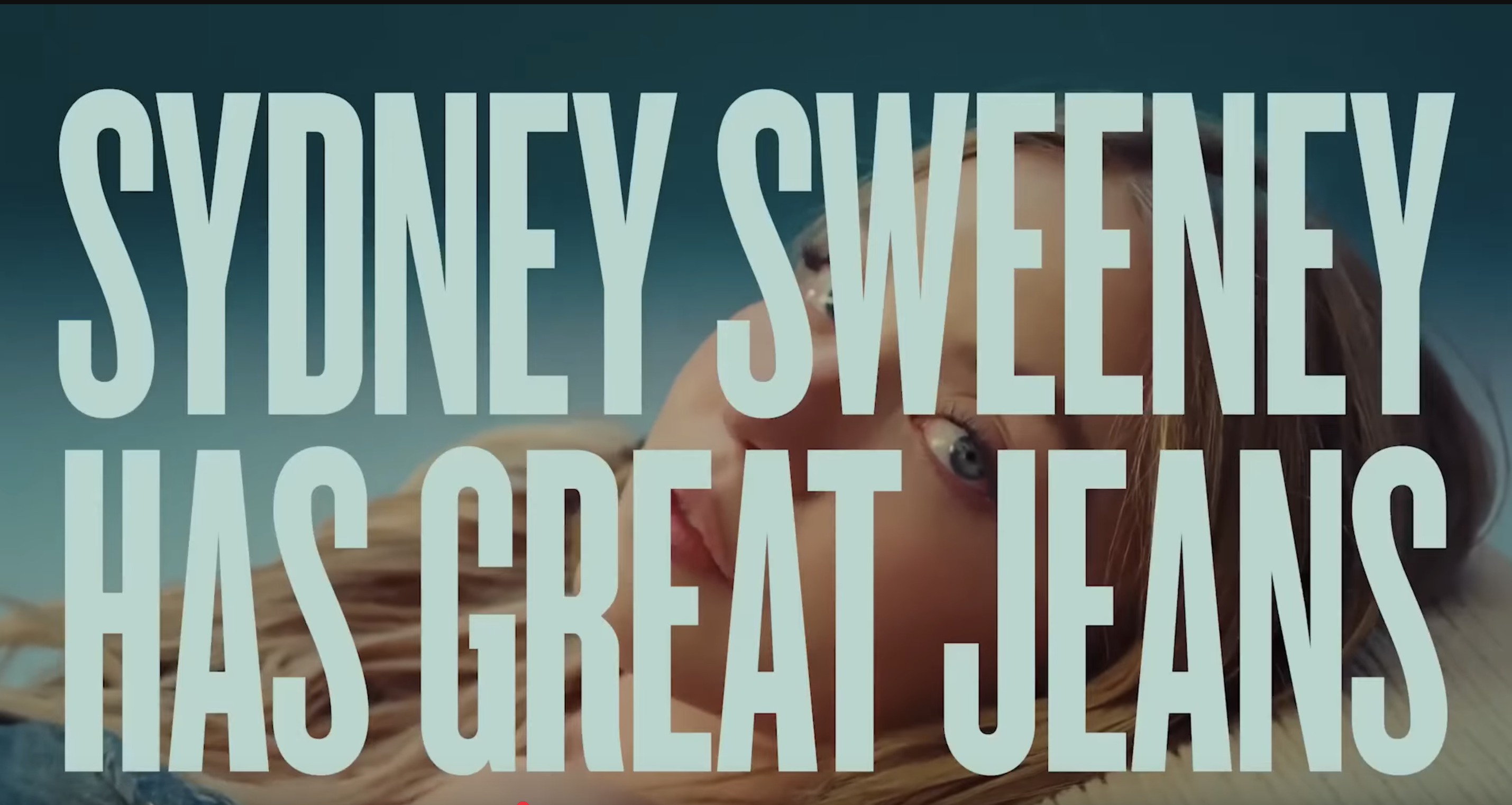
American Eagle Sidney Sweeney advertising image

A lot has been made over the recent American Eagle ads, called “great jeans,” featuring the actress Sydney Sweeney. And the question is, of course, why?

The advertising itself is pretty meh. And that’s not a knock on the creative or production teams. I just mean it’s super simple, mostly one-shots, no effects, no music bed, etc. Just stripped down actor-on-screen-reading-lines stuff. And Sweeney demonstrates no range as an actress – it’s almost a staged testimonial. The “big idea” was leveraging a pun on the word “jeans” to overtly imply “genes.” Okay, not earth-shattering, but not altogether a terrible way in.

It also affords American Eagle the opportunity to call their product line “great,” under the auspices of the pun construct. And the spots (there are at least four :30 versions, including one where she is shown auditioning for the part,) are simple showcases for her body shown in double denim. I’m much more surprised that the blowback wasn’t from the fashion police. Eeeeek!

Sweeney’s primary appeal, to put it kindly, is not in her eyes, nor in her hair (which was almost purposefully styled to look un-styled for these shoots,) nor is it her vocal fry let-me-be-sultry half-whispers. But that appeal was hardly leveraged in any of the spots. So it’s not overtly sexualized.

And any comparisons to Brooke Shields’ turn in Calvin Kleins from the early 1980’s are unwarranted. Sure, the American Eagle ads may be derivative, (attractive young woman alone, lying on the floor, talking directly to camera in and about her jeans,) but Shields was an akimbo nearly six feet tall 15-year old uttering lines that she probably didn’t fully understand to be as provocative as they were. “What comes between me and my Calvins” is far more suggestive and dangerous than a nearly-28-year old independently wealthy, 5’3” actress/producer reading a script whose impetus is a pun on the word “jeans.”

But then, there was no global public forum back in 1980 for moral critics—or heads of state—to air their grievances and/or share their hot takes. The wrong voices have taken over the conversation. And much of it is helping American Eagle get far more mileage out of this campaign than they likely would have otherwise.

In fact, were it not for social media, almost nobody would be talking about these ads, except for maybe the VIP tier of the Sydney Sweeney fan club. On one hand, you have some virtuists (not a word, but if Shakespeare can do it, so can I,) calling one of the ads “racist” and “eugenics signaling” (not kidding) because Sweeney refers to her jeans/genes being blue. (And because she’s Caucasian. And has blonde hair.) Nowhere in the script does it say anything about that making her superior or preferable. You want a script gone awry? Try on Dove’s “white is purity” debacle from 2017. Oooof.

Are there legitimate concerns that AE is showing a skinny white girl in their ads, instead of someone of color, or someone who is more representative of the average American woman in terms of size? Perhaps. According to multiple—and conflicting—sources, the average woman’s jean size is somewhere between 12 and 16. AE chose to ignore that, and opted instead to feature a size 2 or 4 Sweeney. They did it not to be exclusive, or dismissive, but to capitalize on her ascendant stardom and her significant influencer status as a social media personality with a hefty following. The ads are neither racy, nor racist. They’re just aimed at the average/likely American Eagle consumer, who happens to be young-ish and caucasian-ish, and probably identifies with or admires Sweeney in some way.

I also like that American Eagle responded to the criticism. An Instagram post from the brand reads:

“ ‘Sydney Sweeney Has Great Jeans’ is and always was about the jeans. Her jeans. Her story. We’ll continue to celebrate how everyone wears their AE jeans with confidence, their way. Great jeans look good on everyone.”

[Sidebar to all social media community and brand managers: note how the focus is more on the category (jeans) than it is on the brand (AE.)]

In many ways, the conversation has become the campaign. The advertising was just the spark that lit the fire. While that’s exciting, it’s also impossible to control…so AE ought to enjoy this, and be sure to not add any additional accelerant.

Is there a moral to this story? Is there a story in this story? I think so. But it’s far less complicated or sinister than most are making it out to be. I think American Eagle shelled out a lot of money to hire Sydney Sweeney, did some OK advertising, and has gotten tons of marketing mileage out of this, in just over a week. In our business, that’s a big win. And no matter what you do when you’re advertising, you will never please all of the people all of the time.

But remember. American Eagle is a for-profit apparel brand. And their target audience is not (and never was) “all of the people.”

Southwest is headed south.

Southwest Airlines current logo

Over the last several weeks, Southwest Airlines has made some big announcements. First, it announced that its “open seating” policy will be a thing of the past, now switching to assigned seating and offering premium seating as early as next year. The other doozy they just dropped (it tickled me to write that,) is that the airline will now be charging for baggage.

There were some less-doozy-ish announcements too, like making its fares available on aggregators like Expedia, significant changes to its loyalty program and a partnership with Icelandair.

This reminds me a lot of that whopper of a whiff (now I’m on a roll,) by Dunkin Donuts a few years back. (See post here.) Let that – and the subsequent parting of the ways with CMO Tony Wesman – be a lesson on self-inflicted marketing wounds.

Now, turning back to this mother of a misstep, (it just comes naturally to me,) let’s look at how Southwest was different from all other airlines. First, it did not have assigned seating. You just got on the plane and sat where you found one. Second, it never charged baggage fees. In fact, you could check up to TWO bags for free. They had a robust and passionate consumer base that preferred Southwest’s quirky, “we’re-not-like-the-other-guys” approach. It’s what contributed to the idea that Southwest was the airline “with heart and hospitality.”

As an aside, Southwest was quite different operationally as well. They chose to fly the same airplanes (interestingly, the Boeing 737, which includes the 737 Max 8,) across their entire fleet. This meant that their maintenance and mechanical functions could be streamlined for both speed and efficiency. By not serving other manufacturers, Southwest never had to wait for an Airbus expert, or contact a McDonnell Douglas specialist, if some kind of maintenance was needed on an airplane. That same efficiency carried over to sourcing parts, and buying in bulk…all Boeing OEM and likely the same third-party suppliers.

When you look at any marketing category, it’s sometimes hard to see which player has an advantage, or if any player has an advantage at all. That was never the case with the domestic airlines category: Southwest was BY FAR the most strategically well-positioned brand in the category. Those consumer-facing and behind-the-scenes aspects of the brand made the company interesting. And different. And almost entirely focused on keeping costs down for the consumer, which was always welcome news in a world where the price of everything seems to be going up, up, up, and fast.

As a result, Southwest pretty much beat the snot out of their rivals. Planes always full. Reviews always positive. Loyalty always very high.

Southwest Airlines former logo

Enter Elliott Investment Management. They’re some hot-shot hedge fund that likes to get press by “activist investing,” which is code for acting like a big baby after you buy a significant stake in a company. Led by Paul Singer, their founder and lead investment officer, Elliott purchased a roughly 10% share (about $2 Billion) in Southwest Airlines in June of 2024, and began to systematically trash the house. First they called a “special meeting” to openly criticize the CEO and the board of directors for not chasing profits. Then they forced resignations and retirements of key executives, installed their own CEO and half a dozen other cronies, all of whom likely devised these “policy changes,” like trying to wring up to a hundred bucks more out of every Southwest passenger on every flight.

So – if you want to know why Southwest would basically chew off its own arm when it had an established and defensible market position, it might simply be because some rich dude in Palm Beach wants to show the world how big his balance sheet is, legendary brand position be damned.

IMHO, this won’t end well for Southwest in either outcome scenario. If the company makes these radical changes, and it starts to deliver a profit in a year or two that would be acceptable to Elliott Investment Management, then I’ll eat crow AND they will have done so at the expense of a wonderfully and strategically differentiated brand. They’ll just be another commoditized domestic airline that consumers will shop based on slim price margins and/or if they service a particular destination. I think I’ve heard of them…JetBlue, right?

And what if Southwest Airlines does NOT show a profit? What if they lose more money? What if they become poach-able by some other airline that finds their routes and their operations desirable? Well then, Mr. Singer, you’ve killed a very successful company AND a very important brand for no good reason.

And that’s why I’m miffed in my mittens: either way this goes for the company, a really strong brand dies in the process.

Listen kids, work as hard as you can to make your brand different in some meaningful way.

Be different.

STAY different.

Even at the expense of some nominal basis points in potential additional profit.
Real brands with real positions are hard to come by these days.